EmbodAI
Embodied AI for Natural Robotics
State-of-the-art (deep) reinforcement learning systems, for all their fantastic achievements, struggle in real-world tasks that are trivial for humans, especially those involving physical interactions. At the same time these systems consume excessive power for training and operation. That is because they are inefficient with their model representations (many parameters) and their data (big data and many trials for training). We see the (robot) body as an enormous computational resource that is poorly understood and largely underappreciated. But how to harness embodiment remains an important open question.
Signal processing by a physical body is extremely cheap and robust, but specialized; the brain is flexible, but more power-hungry. This results in a design trade-off that leads us to the following two multidisciplinary research questions for this project.
Which continuous-learning processing tasks should be delegated primarily to hardware (body) and which primarily to software (brain), and
how should the brain and the body be designed to capitalize on the potential of embodied intelligence?
We study how we can harness Embodiment as a resource in a next generation of EAI systems.
Supervisory team:
- Youri van de Burgt, Associate Professor, Microsystems, ME, Promotor
- Irene Kuling, Assistant Professor, Robotics, ME, co-promotor
- Thijs van de Laar, Assistant Professor, BIASlab, EE, co-promotor
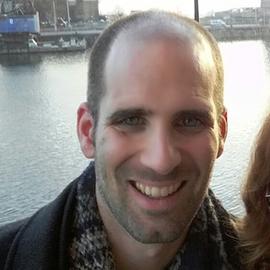
Thijs van de Laar
Assistant professor
I am an assisant professor at BIASlab, where I work on artificial agents that learn to control themselves in uncertain environments. I take inspiration from physics and neuroscience, and develop theory and (software) tools that allow for efficient, real-time interaction.
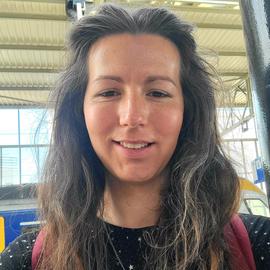
Alex Ledbetter
PhD student
I am a PhD student working jointly under EE/BIASlab, ME/Reshape Lab, and ME/Neuromorphic Engineering groups to enable embodied AI for continuous human-like learning.